
Warning: Parameter 2 to qtranxf_postsFilter() expected to be a reference, value given in /var/www/vhosts/riff.it/subdomains/archivio/httpdocs/wp-includes/class-wp-hook.php on line 286
SYNOPSIS:
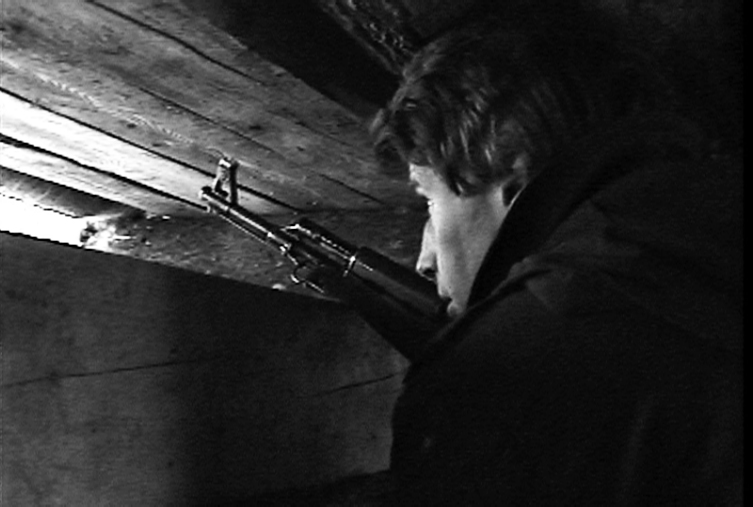
In April 1992, Hidajet, the fifty-year-old manager of a State-owned enterprise, an atheist of Muslim ethnicity and a fervent admirer of Tito, in the space of just a few hours found himself and his whole family in the front line. He was forced to fight in the trenches of Sarajevo against the ‘Chetniks’, the militia that had re-emerged from the graves of history, who had killed his Partisan father back in 1942, before he was born. Although he had taken up arms, Hidajet was fighting to avoid taking death for granted and he simply could not accept such an inexplicable war wrapped in a spider’s web of disreputable interests. In the city, his family too were in the front line. In the house under sniper and artillery fire, his mother Muniba, one of Tito’s Partisans, and his wife Gordena, a Serbian’Montenegrin with Croatian and Italian grandparents, had to defend their multi-ethnic roots and stand up to the siege daily. Without electricity,water or food, they supported Hidajet as well as Nebojsa, Hidajet and Gordena’s twenty-year-old son, who was studying painting and sculpture at the Academy, and spent three days a week among paints, brushes, canvasses and sculptures, and four at the front with a precision rifle in his hands. Twenty years after the first shots for the film, Hidajet and his family are back to talk about the siege. Muniba is now ninety-six and would like to die without seeing the fourth
war of her life. After retiring, Hidajet took a degree in literature and in a collection of his poetry wrote: ‘We, the last of the middle world. We, between the dead and the living.’ Gordena remains heartsick and desperate for her country, currently split into different regions in the hands of war profiteers. Nebojsa is now an internationally renowned artist, but stung by profound bitterness. ‘The war was lost by everyone to an equal extent. And not only did we lose the war, we also lost peace.’ Twenty springs may have gone by, but the struggle continues.
In April 1992, Hidajet, the fifty-year-old manager of a State-owned enterprise, an atheist of Muslim ethnicity and a fervent admirer of Tito, in the space of just a few hours found himself and his whole family in the front line. He was forced to fight in the trenches of Sarajevo against the ‘Chetniks’, the militia that had re-emerged from the graves of history, who had killed his Partisan father back in 1942, before he was born. Although he had taken up arms, Hidajet was fighting to avoid taking death for granted and he simply could not accept such an inexplicable war wrapped in a spider’s web of disreputable interests. In the city, his family too were in the front line. In the house under sniper and artillery fire, his mother Muniba, one of Tito’s Partisans, and his wife Gordena, a Serbian’Montenegrin with Croatian and Italian grandparents, had to defend their multi-ethnic roots and stand up to the siege daily. Without electricity,water or food, they supported Hidajet as well as Nebojsa, Hidajet and Gordena’s twenty-year-old son, who was studying painting and sculpture at the Academy, and spent three days a week among paints, brushes, canvasses and sculptures, and four at the front with a precision rifle in his hands. Twenty years after the first shots for the film, Hidajet and his family are back to talk about the siege. Muniba is now ninety-six and would like to die without seeing the fourth
war of her life. After retiring, Hidajet took a degree in literature and in a collection of his poetry wrote: ‘We, the last of the middle world. We, between the dead and the living.’ Gordena remains heartsick and desperate for her country, currently split into different regions in the hands of war profiteers. Nebojsa is now an internationally renowned artist, but stung by profound bitterness. ‘The war was lost by everyone to an equal extent. And not only did we lose the war, we also lost peace.’ Twenty springs may have gone by, but the struggle continues.

